Nederlands
 Deutsch
 Svenska
 Dansk
Dansk


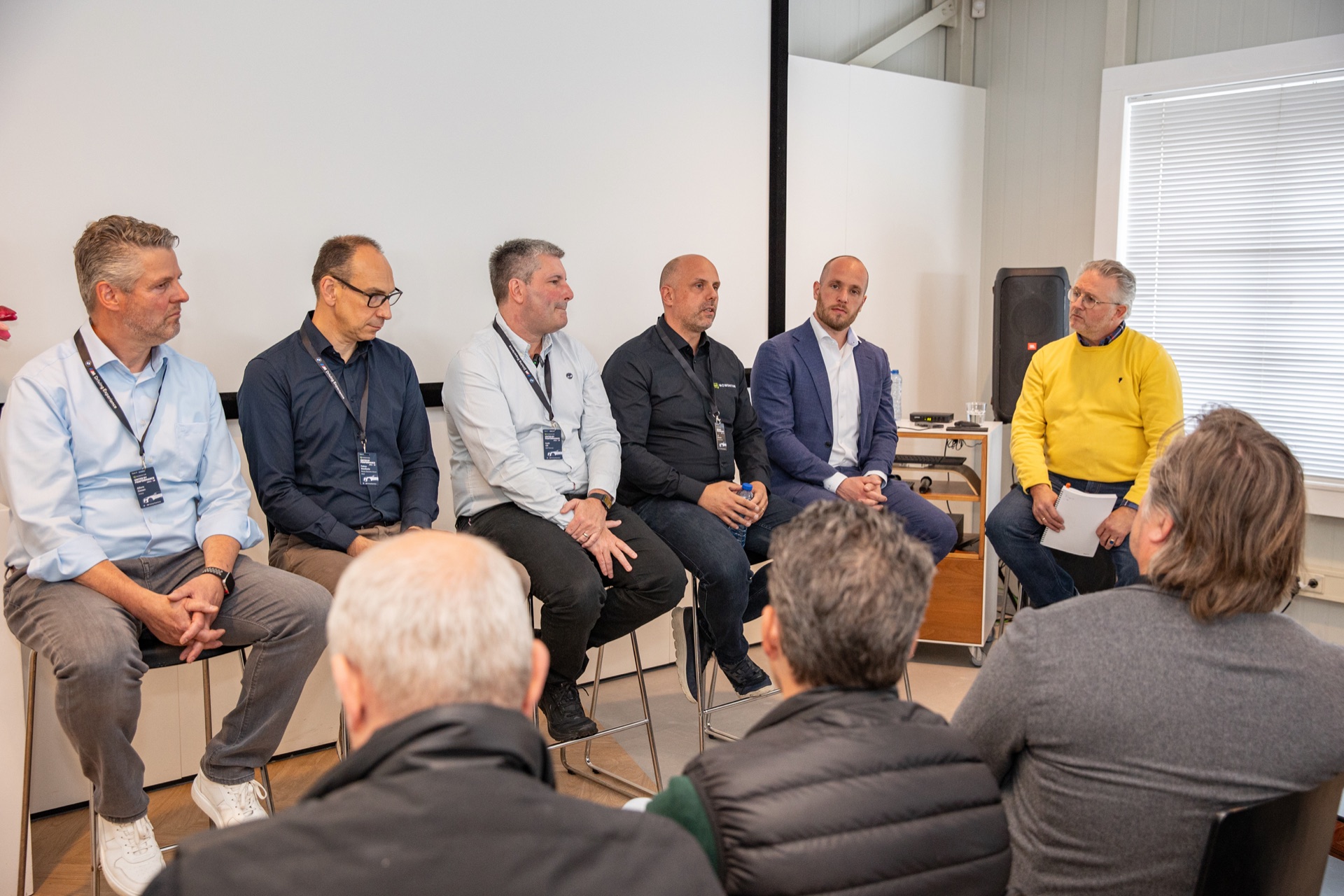
One of the highlights of the BMW Driving Experience 2026 was the panel discussion, expertly moderated by Eric Luteijn, featuring Keith Gill (BDR Thermea Group), Fabian Doodkorte (Neways) and Alfons Giesen (Kramp).
With decades of experience in technology, transformation and leadership, Eric guided a candid discussion on one of the biggest challenges organisations face today: how to embrace AI without losing control.
The conversation made one thing clear:
AI is no longer a future topic
It is already influencing decisions, processes and security strategies inside organisations today.
What stood out was that every organisation is approaching AI from a slightly different perspective.
At Neways, Fabian Doodkorte explained that the focus is currently on governance, policy and risk management. The priority is understanding where AI is being used and ensuring the organisation remains in control as adoption accelerates.
Keith Gill shared how BDR Thermea Group is approaching AI from a business perspective. Rather than starting with restrictions, the focus is on visibility and understanding where AI can genuinely create value for the organisation.
Kramp follows a similar path. Alfons Giesen described how the organisation is exploring AI opportunities while continuing to build on the capabilities of established technology ecosystems and enterprise platforms.
Although their approaches differ, all three organisations recognised that they are still in a phase of exploration and discovery. The challenge is not whether AI will become important, but how to gain sufficient insight to make informed decisions.
Interestingly, topics such as data sovereignty are being monitored closely, but are not yet at the top of the agenda. For most organisations, visibility, governance and practical implementation currently take priority.
Visibility first. Action second. Waiting is not an option.
The panel discussion perfectly reinforced the central theme of the BMW Driving Experience:
Speed without control creates risk. Control without action creates delay.
Momentum's perspective is deliberately pragmatic.
It starts with visibility.
Organisations need insight into where AI is being used, what data is involved and what risks are emerging. From that foundation, policies and governance frameworks can be developed that fit the organisation's objectives and risk appetite.
At the same time, the speed of AI adoption means organisations cannot afford to wait for perfect policies before taking action.
That is why Momentum advocates a dual-track approach:
- Create visibility and build governance frameworks that define responsible AI usage.
- Leverage existing technologies today to secure access, monitor activity and reduce risk while those frameworks continue to evolve.
Platforms such as Cato Networks already provide organisations with the visibility, control and security capabilities needed to support this journey.
The BMW Driving Experience was built around the idea that performance only matters when you remain in control.
The panel discussion showed that exactly the same principle applies to AI.
The organisations that will lead in the coming years are not necessarily the ones moving fastest. They are the ones that combine innovation with visibility, governance and control.