Nederlands
 Deutsch
 Svenska
 Dansk
Dansk


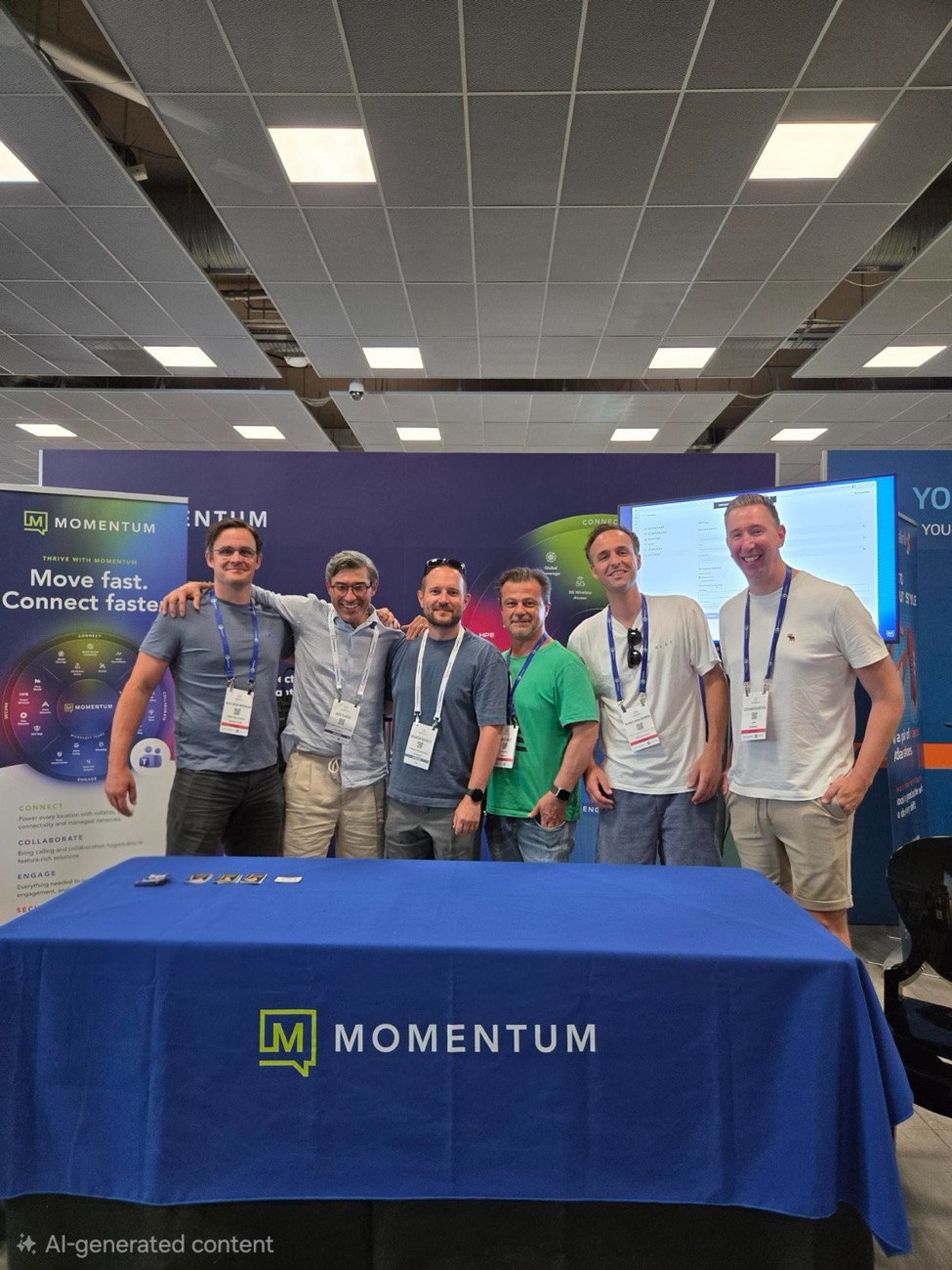
Day 2 of Commsverse was less about AI and more about the practical side: Teams Phone as a production system. The message was clear - Teams Phone is ready for the enterprise. The question is no longer whether it works, but whether your organisation sets it up well. From licensing to AI agents, the details make the difference.
Three sessions illustrated that nicely: where Teams Phone really stands today, what goes wrong in organisations around collaboration in Teams, and how you solve a seemingly simple problem that Microsoft appears to have forgotten.
A-Z of Microsoft Teams Phone
Two things stood out.
Teams Phone Agents (Frontier Programme). Microsoft is building AI voice agents that run directly inside auto attendants and call queues. Customers then speak to an AI agent for appointments, questions or rescheduling - without waiting on hold. And the routing carries context: the agent has already had a conversation before the call reaches an employee. It is currently in the Frontier Programme (preview), and directly relevant to our CCaaS conversations.
Queues App. Microsoft's "contact centre light" inside Teams, now available on Windows, Mac and mobile (a web version is still missing). Shared missed calls and voicemail history were just added - according to speaker Zach, the first feature that justifies a Teams Premium licence for every agent. And the real-time reporting is now genuinely real-time: seconds, not minutes.
Chat vs Channels: a leadership question
An open discussion session with speakers for and against, and a live audience vote. Informal, but strong on substance. The core message: everyone knows Channels is better for knowledge retention and collaboration. But Chat simply wins, because it has less friction. That is a human problem, not a technical one.
Everyone in the room knew Channels is better. Everyone uses Chat anyway. That is not a technical problem - it is a leadership problem.
A few sharp observations from the room:
- Microsoft itself merged Chat and Channels in the interface - because people were mostly in Chat anyway.
- Knowledge disappears from Chats the moment someone leaves the company. In a Channel it stays, findable for new colleagues.
- Copilot widens that gap: in a Channel a new employee can simply ask what was decided. In a Chat they cannot.
- "House rules" only work if managers actively enforce them. If the manager does not set the example, no one does.
- Cultural factor: in the UK and Europe, business communication regularly falls back to WhatsApp or Signal. In the US that is far less common.
Interesting for our audience: this is not a Teams problem alone. It is an adoption question. And adoption starts with leadership, not with IT.
The layer on top
The third session was about a seemingly simple problem that keeps coming back in practice. And that is exactly the thread of the day:
Teams Phone as a mature PBX works. But without the right layer on top - reception functionality, caller recognition, reporting - you shortchange your customers. That was the message of day 2 in London.