Nederlands
 Deutsch
 Svenska
 Dansk



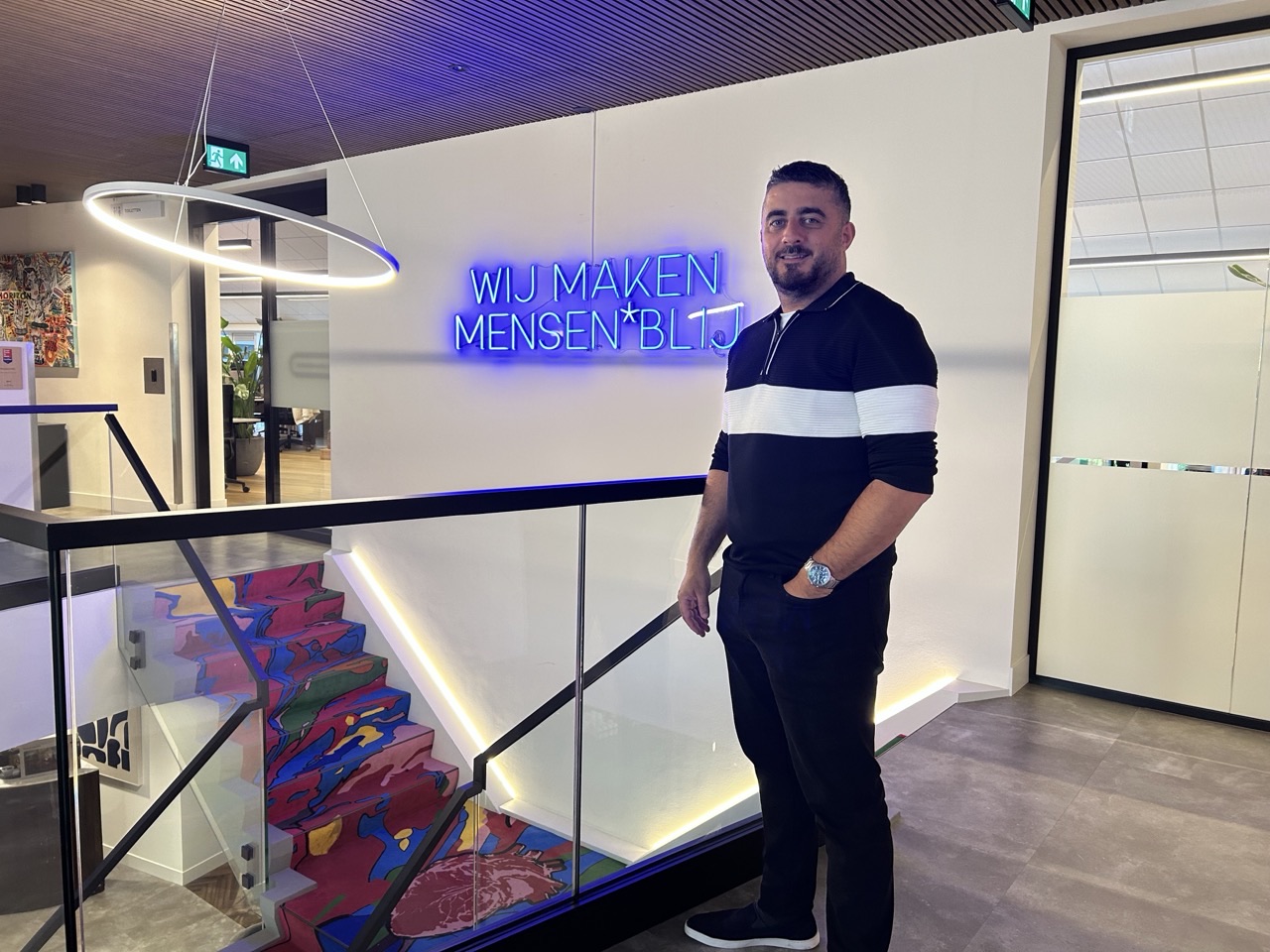
For years, network and security were two separate worlds, each with its own team, its own tools and often its own supplier. That separation no longer holds. Bert Kamper, EVP of Technology at Momentum EMEA, sees four trends pushing the two together, and explains why he believes Cato SASE fits them well.
This article is based on an interview Rashid Niamat conducted with Bert for the Dutch trade publication IT Channel Pro (9 November 2026). The interview first appeared in Infosecurity Magazine, issue 02-2026. We set out the four trends, show what they mean for your network and point to further reading where we can.
In short. The network team and the security team are growing towards each other. Organisations need to be able to move faster. Every location needs the same quality. And redundancy has become a requirement in its own right. The common thread is visibility: knowing what is happening across network and security, and being able to show that you are in control. An integrated platform such as Cato SASE makes that easier, especially when one partner manages it from end to end.
1. NOC and SOC are growing towards each other
For a long time, the network team (NOC) and the security team (SOC) worked side by side, whether you ran them yourself or outsourced them. According to Kamper, that separation is becoming harder and harder to maintain. Incidents that affect both the network and security have become the rule rather than the exception.
The overlap started with the cloud and hybrid working, and AI is reinforcing it. A collection of separate tools, each designed for its own area, fits that reality less and less. Every extra tool means another console, another policy and another place where context gets lost. How such a patchwork comes about, and how to unwind it step by step, is covered in From a fragmented network to one SASE platform.
Less complexity and more visibility, so more context. That is the direction we are heading.
SASE brings network and security together in one platform, with one policy. According to Kamper, Cato focuses on simplicity. The security team spends less time on firewall firmware and on working out what a change will do elsewhere, and can get back to the policies themselves. What SASE is exactly is explained in What is SASE?, and how it differs from SSE in SASE vs SSE.
Momentum goes a long way here. Customers who take Cato SASE through Momentum can leave the entire network and security process with us, including the management of their internet connections. According to Kamper, that end-to-end management is needed to spot, analyse and resolve problems quickly. It also means standardising equipment, cabling and architecture. Customers who prefer to keep management and monitoring in house can do so; in his view, that already brings gains in efficiency and quality. The different models are compared in our guide to Managed SASE.
2. Being able to move faster
Today a company decides to start operating in a new location next week. Moving people and hardware is not complicated, says Kamper. Connectivity is another story.
Lead times for high-capacity connections such as MPLS are measured in months. That no longer fits the times.
That, he says, explains why SD-WAN is growing so strongly. Existing locations also need to handle peaks, predictable or not. Kamper gives the example of an organisation active in dozens of countries that briefs all its employees at once in a Teams session. Then it is not just the head office that has to cope, but every branch.
Cato runs on its own global backbone with more than 85 PoPs. That lets you deploy and adjust capacity faster than with conventional connections. If you are considering the switch, read Replacing MPLS with SD-WAN and SASE.
3. The same quality everywhere
Momentum delivers Cato to organisations operating in several countries and continents. For them, connectivity is not only indispensable; they also set requirements for it. That is the third trend Kamper sees.
In his view, that is exactly why Momentum is so enthusiastic about Cato SASE. An administrator can add a new location with little effort, switch it off again after use and choose the routes with the lowest latency. A change is rolled out in one go, so every location gets the same network. Because it is software-defined, it is much easier to manage than hardware firewalls, and the risk of errors and unwanted differences in performance goes down.
What this means for companies with branches in several countries is covered in Network security for international businesses. How the platform itself is built is explained in the Cato Networks SASE platform.
4. Redundancy is a requirement in its own right
Cato easily accepts different types of connection, such as 4G, 5G and Starlink, sometimes even as the primary connection. According to Kamper, this has made it easier for customers to meet higher redundancy requirements. Those requirements now weigh so heavily that redundancy has become a fourth trend in its own right, rather than just one aspect of quality.
More redundancy means more than two types of connection. Where fibre is available, you preferably choose different paths. And even then, monitoring remains necessary, because sometimes a path or route has to be adjusted. That correction needs to be quick and simple, ideally without the organisation noticing anything.
Flexibility is therefore a precondition for increasing your redundancy.
How to follow the connections underneath (underlay) and the security network on top (overlay) in one view is described in our article on underlay and overlay in the GlobalControl portal.
The common thread: visibility and being in control
Throughout the conversation, Kamper keeps coming back to visibility. Being in control has become a hard requirement, partly because laws and regulations demand it. What the European NIS2 Directive asks for here is explained in NIS2 and SASE.
Keeping that manageable takes a high degree of integration, according to Kamper. With Cato SASE, Momentum offers one platform for network and security. For everything related to it, the customer has a single point of contact, 24/7 and for every country where they operate.
What customers notice after the switch
- Lower latency. According to Kamper, companies report improvements in the order of 30 to 40 milliseconds once they use the Cato backbone. For some customers, that matters a great deal.
- Costs. Costs are also mentioned often. How to work them out for yourself is covered in What does Cato Networks SASE cost, and what does it deliver?
- Less pressure on your own organisation. Network management and security weigh less heavily, and uncertainty about roles and responsibilities disappears.
Less noise means more time for regular work.
According to Kamper, Cato SASE can also be used to keep control over AI. That will be the subject of a follow-up article. If you want to know how it works now, read Shadow AI is the new shadow IT and the guide Managing shadow AI.
Five questions for your organisation
- Collaboration. Who picks up an incident that affects both the network and security, and how much time is lost in the handover?
- Speed. How quickly can you get a new location online securely?
- Quality. Does every branch get the same network, and can you show it?
- Redundancy. What happens when a connection fails, and who notices first?
- Visibility. Can you demonstrate that you are in control when a regulator or customer asks?
Where Momentum stands
Momentum is a specialised implementation partner of Cato Networks in EMEA. We deliver Cato SASE and can take responsibility for the entire network and security process, including the internet connections underneath. Whether you outsource management completely or keep it in your own hands, we are happy to look at which of the four trends weigh most heavily for you. All our guides on SASE and Cato are collected in the Cato knowledge portal.
Source: Rashid Niamat, Hoe Cato SASE vier trends ondersteunt (How Cato SASE supports four trends), IT Channel Pro, 9 November 2026, in Dutch. First published in Infosecurity Magazine 02-2026. Bert Kamper's quotes are translated from that interview.